Is Remote (eKYC) Onboarding Allowed in the UAE?
Yes. Remote, non-face-to-face onboarding is allowed under the UAE's risk-based approach, provided you carry out full customer due diligence. Cabinet Resolution 134 of 2025 (Articles 6 to 9) requires you to identify the customer and verify their identity using reliable, independent sources, whether in person or online. Because non-face-to-face is a risk factor, you apply eKYC controls and measures proportionate to the risk (Article 5).
What is eKYC (electronic KYC)?
eKYC, or electronic KYC, is carrying out customer identification and verification through digital means rather than in person. It typically combines document verification (checking an identity document is genuine), a biometric or liveness check (confirming the customer is a real, present person and matches the document), and data checks against reliable, independent sources. Done well, eKYC can be as robust as a face-to-face check.
What Controls does compliant Remote Onboarding Require?
- Assess the channel risk. Treat non-face-to-face onboarding as a risk factor in your risk assessment and decide what measures it calls for (Article 5).
- Collect identity information. Gather the identity details and documents you need from the customer through your digital channel.
- Verify the identity. Confirm the identity against reliable, independent sources, including authenticating the identity document (Articles 6 to 9).
- Confirm a real, present person. Use a biometric or liveness check, or video identification, to bind the person to the document and defeat impersonation.
- Screen and check ownership.Screen against sanctions, PEP and adverse-media lists, and for entities identify the beneficial owners.
- Apply enhanced measures and keep records. Where the risk is higher, apply enhanced due diligence, and record every step so the onboarding is defensible.
Onboarding Fraud and How to Stop It
About this Remote Onboarding AML Course

What You will Learn in this Remote Onboarding Course
By the end of the course you will be able to:
Explain whether and how remote, non-face-to-face onboarding is allowed in the UAE.
Carry out eKYC: document verification, biometric or liveness checks and data checks.
Verify identity using reliable, independent sources for individuals and entities.
Treat non-face-to-face as a risk factor and apply proportionate measures.
Recognise and defend against onboarding fraud, including impersonation and synthetic identity.
Document remote onboarding so it stands up to audit and regulatory review.
Why this Remote Onboarding Course is Worth your Time

Practical takeaway
You will be able to design and run remote onboarding that is smooth for genuine customers and compliant under UAE law.Remote Onboarding Course Curriculum
Who should Take this Course
Onboarding and KYC analysts who run digital journeys, compliance officers and MLROs who own the standard, product and operations teams designing onboarding flows, fraud and risk staff, and the owners and teams of banks, fintechs, virtual-asset firms and DNFBPs that onboard customers online. No prior qualification is needed, and the course works whether you operate in the UAE or another AML regime.

What you Get
- A practical, self-paced online course you can complete in a single focused session.
- A certificate of completion you can keep as evidence of training.
- A remote-onboarding approach you can apply straight to your own digital journey.
Why Choose Pro AML Courses
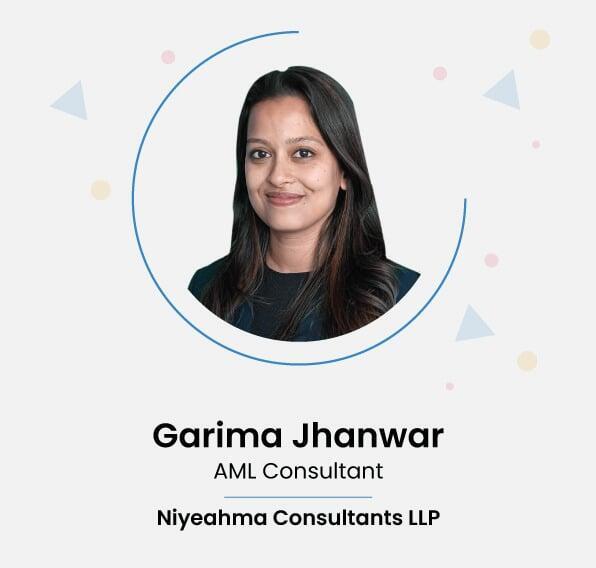
Learn from the Pro
Garima Jhanwar is a practising compliance professional on the ProAML faculty, with a focus on customer onboarding and due diligence. Like every ProAML instructor, she brings real casework into the course, so the material is practical, current and grounded in how compliance is actually done.
Get Started Now!

Why learn with Pro AML Training
ProAML Training is part of NIYEAHMA's AMLVerse, a global AML compliance ecosystem that connects consulting, regulatory knowledge and technology, including the consulting practice AML UAE. Courses are built and taught by practising compliance professionals, among them founder Pathik Shah (FCA, CAMS, CISA), who brings more than 28 years in governance, risk and compliance. That means the material is practical, current and grounded in real casework rather than recycled theory.
- Practitioner-led: written and delivered by working AML professionals, not generalist course writers.
- Practical and job-ready: focused on what you do at your desk, with real red flags, templates and worked examples.
- Current: kept in step with FATF standards and the latest national rules, so you are not learning last year's framework.
- Globally relevant: principles apply across jurisdictions, with strong depth in high-demand markets such as the UAE.